
A plumbing business can provide excellent service and still struggle to get enough new customers. If people in your service area cannot find your business on Google, they may call a competitor instead.
This is where SEO for plumbers can help.
Search engine optimization (SEO) helps your plumbing business appear when people search for services such as emergency plumbing, drain cleaning, pipe repair, water heater installation, and leak detection. It can also help potential customers understand your services, check your reviews, and contact you before choosing another plumber.
However, getting more leads from SEO involves more than adding keywords to your website. You need a complete plan that covers local search, your Google Business Profile, service pages, customer reviews, website performance, and lead tracking.
This guide explains how to build that plan, what to prioritise, how to measure results, and when hiring an SEO company may make sense.
What Is SEO for Plumbers?
SEO for plumbers is the process of improving a plumbing business’s visibility in unpaid search results on Google and other search engines.
The goal is to help people find your business when they need plumbing services in the areas you serve.
For example, someone with a blocked drain might search for “drain cleaning near me“. Another person planning a bathroom renovation might search for “bathroom plumbing installation in Austin“.
These searches show different needs. The first person may need help quickly, while the second may be comparing providers and planning a project.
A good plumbing SEO strategy accounts for both.
It usually includes:
- Local SEO: Improving your visibility in Google Maps and local search results.
- Keyword research: Finding the terms people use when searching for plumbing services.
- Service page optimisation: Creating useful pages for each major service you offer.
- Website SEO: Improving page titles, headings, internal links, and content.
- Technical SEO: Making sure search engines can crawl, understand, and index your website.
- Review management: Encouraging honest customer feedback and responding professionally.
- Link building: Earning relevant links from trusted websites.
- Lead tracking: Measuring calls, forms, booked appointments, and revenue from organic search.
These activities work together. A well-optimised website may attract visitors, but if the phone number is difficult to find or the service information is unclear, those visitors may leave without contacting you.
Why Is SEO Important for Plumbing Businesses?
Plumbing is a local service. Most customers need a plumber who can reach their home or business within a reasonable time.
When a pipe bursts, a toilet stops working, or a water heater fails, people often search online for a nearby provider. Businesses that appear prominently and clearly explain their services have an opportunity to win that enquiry.
SEO can support plumbing businesses in several ways.
1. Reach People Who Already Need a Plumber
Someone searching for “emergency plumber in Denver” has a clear need. This is different from someone casually reading about home maintenance.
By creating pages that match specific plumbing services and customer needs, you can reach people who are more likely to contact a provider.
2. Improve Local Visibility
Google Search and Google Maps can help customers find plumbing businesses in their area.
Google explains that local rankings mainly depend on relevance, distance, and prominence. Accurate business information helps Google understand what you offer, while reviews and information from other websites can contribute to your business’s prominence.
You cannot control every ranking factor, particularly the searcher’s distance from your business. You can, however, improve the accuracy of your information, the usefulness of your website, and your reputation. Google’s local ranking guidance explains these factors in more detail.
3. Build Trust Before the First Call
Customers may compare several plumbing companies before making a decision.
They may want to know:
- Which plumbing services do you provide?
- Do you serve their location?
- Are you available for urgent repairs?
- Do you have relevant experience?
- What do previous customers say?
- How can they request a quote?
A clear website answers these questions before the customer calls. Photos of completed work, genuine reviews, relevant qualifications, and transparent service information can make the decision easier.
4. Build a More Consistent Source of Enquiries
Paid advertising can generate visibility while a campaign is running. SEO focuses on improving unpaid search visibility over time.
SEO requires ongoing work, and rankings can change. However, useful service pages and a well-maintained website can continue attracting visitors after publication.
This makes SEO worth considering as part of a long-term customer acquisition plan, rather than treating every new customer as a separate advertising expense.
5. Compete With Larger Plumbing Companies
A large company may have a bigger marketing budget, but that does not mean a smaller plumbing business cannot compete in local search.
A smaller company can focus on specific services, a clearly defined service area, strong customer reviews, and useful local content.
For example, a plumbing company specialising in water heater repair may have a stronger service page for that specific job than a competitor with a general page listing dozens of unrelated services.
The opportunity is to become a strong match for the customers and jobs you want to attract.
How Does SEO for Plumbers Work?
A successful campaign follows a practical process.
First, identify the services and locations that matter most to your business. Then research how customers search for those services and make sure your website has the right pages.
Next, improve your Google Business Profile, strengthen your website, and build trust through accurate information and customer feedback.
Finally, track calls, forms, booked jobs, and revenue to understand which activities produce business results.
Here is how each part works.
1. Start With Plumbing Keyword Research
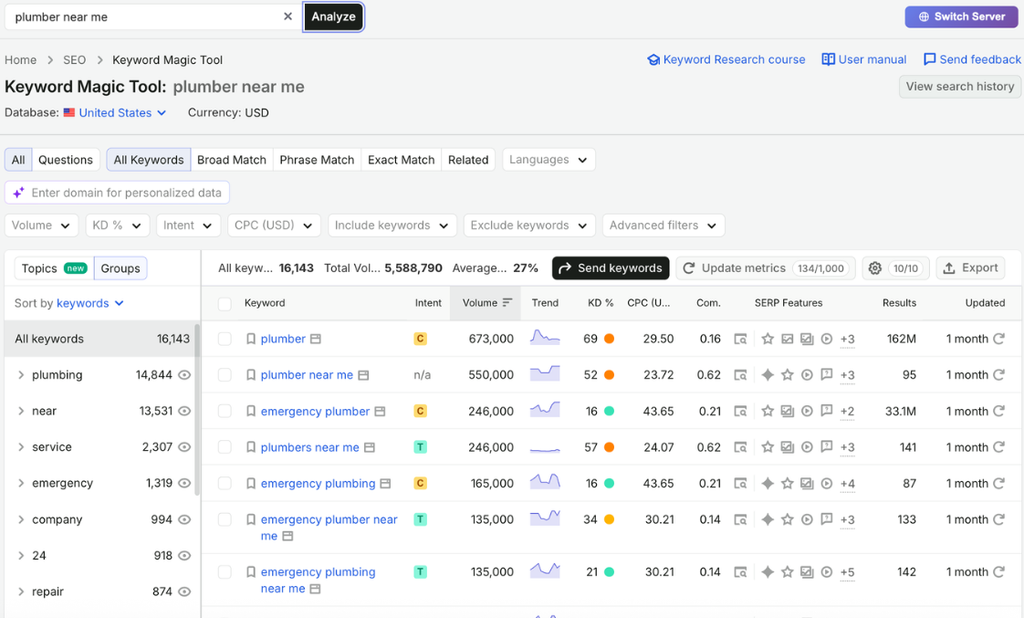
Keyword research helps you understand what potential customers search for before hiring a plumber.
The aim is not to add as many keywords as possible to your website. It is to match each important search to the most useful page.
Understand the Main Types of Plumbing Keywords
Different searches show different levels of urgency and buying intent.
| Keyword Type | Examples | Best Page or Action |
|---|---|---|
| General Service | Plumbing services, residential plumber | Main services page |
| Specific Service | Drain cleaning, pipe repair | Dedicated service page |
| Emergency Service | Emergency plumber, burst pipe repair | Emergency plumbing page |
| Local Service | Plumber in Dallas, drain cleaning in Austin | Relevant location or service page |
| Commercial Service | Commercial plumbing contractor | Commercial plumbing page |
| Installation | Water heater installation, toilet installation | Installation service page |
| Cost-Related | Water heater installation cost | Cost guide or service pricing content |
| Problem-Related | Why is my drain clogged? | Helpful article linked to the relevant service |
| Brand-Related | Your company name, your company reviews | Homepage and reputation pages |
Not every plumbing business offers every service. Only target services that you can actually provide.
Find Keywords for Your Most Important Services
Start by writing down every service your business offers. Group similar services together, then research how customers search for them.
For example, a drain cleaning service might be relevant to searches such as:
- Drain cleaning service
- Drain cleaning company
- Clogged drain plumber
- Kitchen drain cleaning
- Bathroom drain cleaning
- Drain cleaning in [city]
These terms may share the same intent. You do not necessarily need a separate page for every variation.
Check the search results for the terms you want to target. If Google shows similar pages for several keywords, one detailed service page may be enough. If the searches have clearly different needs, separate pages may be more useful.
Use These Tools for Keyword Research
Google Search: Enter your main services and locations. Review autocomplete suggestions and the types of pages that appear in the results.
Google Search Console: If your website is already receiving traffic, review the queries that generate impressions and clicks. You may find that your pages appear for useful services you have not actively targeted.
Google Keyword Planner: Use it to review keyword ideas and estimated search ranges for your target locations. Search estimates are not exact forecasts of future traffic.
Google Trends: Compare interest in different services over time. This can help identify seasonal patterns, although it does not provide exact local search volume for every term.
SEO research tools: Tools such as Ahrefs and Semrush can help compare keyword demand, competitor pages, and ranking difficulty estimates. Treat these estimates as research inputs, not guarantees.
Prioritise Keywords by Business Value
Search volume alone is not enough to choose a keyword.
Suppose your business offers both small tap repairs and commercial plumbing installations. A tap repair keyword may attract more searches, but one commercial installation enquiry could be worth much more to your business.
Consider four factors:
- Service relevance: Does the keyword describe a service you offer?
- Location relevance: Can you serve customers searching from that area?
- Customer intent: Is the person researching a problem, comparing providers, or ready to hire?
- Business value: Is the service profitable, available, and worth promoting?
Use these factors to decide which pages to improve first.
2. Optimise Your Google Business Profile
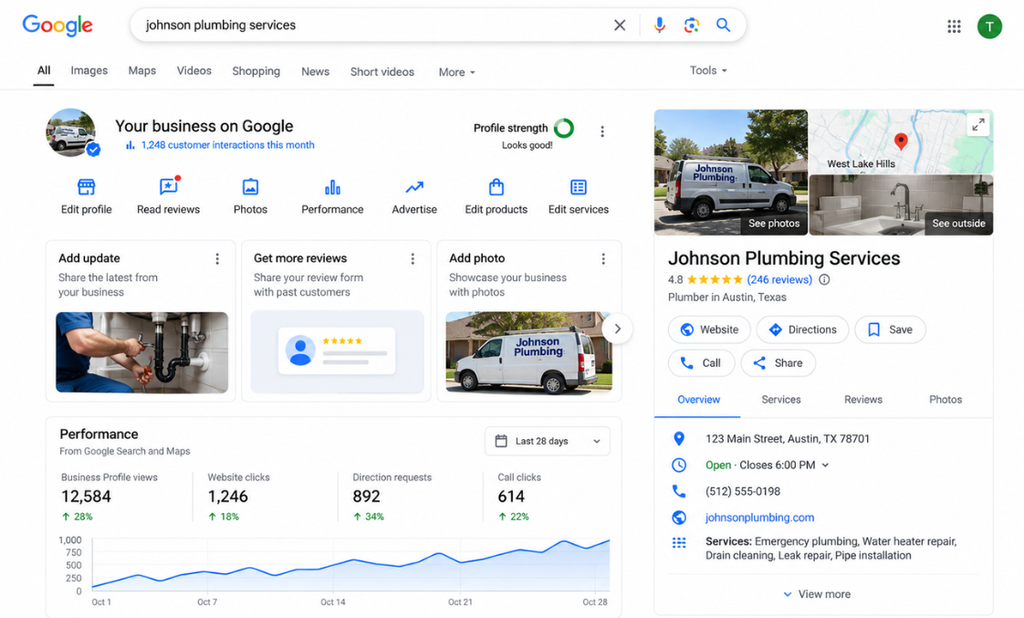
Your Google Business Profile is one of the most important parts of local SEO for plumbers.
It allows your business information to appear across Google Search and Maps. Depending on the query and location, customers may see your business name, phone number, reviews, opening hours, service information, and website.
A complete profile helps customers understand your business and helps Google match your listing with relevant searches.
Claim and Verify Your Profile
Start by claiming your business through Google Business Profile.
Complete Google’s verification process and make sure you control the account. Use your real business details and follow Google’s eligibility and representation guidelines.
Do not create extra profiles for the same business simply to target more keywords or locations.
Choose the Right Business Category
Your primary category should describe the main business you operate.
For a plumbing company, this will often be “Plumber“. If your business has a genuine specialist focus, review the available categories and select those that accurately describe your services.
Do not add unrelated categories just because they contain useful keywords.
Keep Business Information Accurate
Check that your profile includes:
- Correct business name
- Main phone number
- Website address
- Accurate business hours
- Appropriate business category
- Service information
- Correct address or service area, according to your business model
- Current photos
- Relevant attributes where available
Your business name should match how you genuinely operate. Do not add extra city names, service keywords, or promotional phrases to the name unless they are part of your real-world business name.
Set Your Service Area Correctly
Many plumbers travel to customers rather than serving people at a public storefront.
If you operate as a service-area business, configure your profile according to Google’s rules. Do not display a residential address to customers if it is not a staffed location where customers can visit during the stated hours.
Only list areas you genuinely serve. Adding distant cities does not guarantee that your business will appear prominently for searches in those places.
Add Services to Your Profile
List your actual plumbing services, such as:
- Emergency plumbing
- Drain cleaning
- Leak detection
- Pipe repair
- Water heater repair
- Water heater installation
- Toilet repair
- Bathroom plumbing
- Commercial plumbing
Use clear descriptions that explain the work involved. Avoid repetitive keyword lists.
Upload Real Photos
Use genuine photos of your business, team, equipment, vehicles, and completed projects where appropriate.
Examples include:
- A water heater installation
- A repaired pipe
- A completed bathroom plumbing project
- Your service vehicle
- Your team at work, with customer permission where needed
Keep images current and relevant. Do not use stock photos to suggest that your team completed work it did not perform.
Use Profile Updates When They Help Customers
You can use available profile features to share service updates, seasonal advice, or useful business information.
For example, a plumbing company might publish advice about preventing frozen pipes before winter or explain how customers can arrange a water heater inspection.
Do not post just to increase the number of updates. Focus on information that helps customers make a decision.
3. Build a Review System That Customers Can Trust
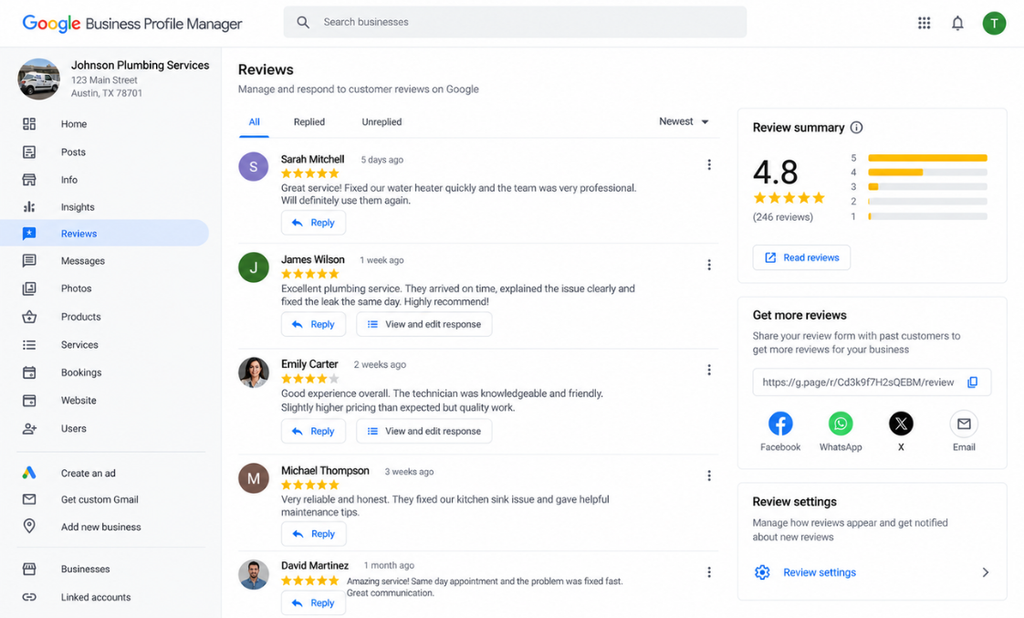
Reviews influence how customers assess your plumbing business. Google also states that review quantity and positive ratings can contribute to prominence in local results.
However, reviews should reflect real customer experiences. Do not buy reviews, create fake accounts, offer rewards in exchange for positive ratings, or ask only customers you expect to be happy to leave feedback.
Ask Customers at the Right Time
A simple process can help you collect feedback consistently.
- Complete the plumbing job.
- Confirm that the customer understands the work performed.
- Send a polite follow-up message.
- Include a direct link to your Google review form.
- Thank the customer for their feedback, regardless of the rating.
For example:
“Thanks for choosing us for your plumbing work. If you have a moment, we’d appreciate an honest review of your experience. Your feedback helps us improve our service.”
Keep the request short and easy to act on.
Respond to Positive and Negative Reviews
A thoughtful response shows that your business takes feedback seriously.
For a positive review, thank the customer and refer to the service where appropriate.
For a negative review, stay professional. Acknowledge the concern, avoid sharing private customer details, and offer an appropriate way to resolve the issue.
Do not argue publicly or post sensitive details about the job.
Make Review Management Part of Your Routine
Assign responsibility for monitoring new reviews. Set a regular time to check them and respond.
Review themes can also reveal useful business information. If customers repeatedly praise your communication, punctuality, or clear pricing, these may be strengths worth explaining on your website.
If the same complaint appears several times, address the underlying service issue rather than treating every review as a marketing problem.
4. Create Dedicated Pages for Your Plumbing Services
One of the most useful improvements you can make is to create a clear page for each major service you offer.
A single page that lists every plumbing service may not answer a customer’s specific questions well enough.
For example, someone searching for water heater installation needs different information from someone looking for emergency leak repair.
Which Service Pages Should a Plumbing Website Have?
The right pages depend on your services, demand, and business model. A typical site may include:
| Page | What It Should Explain |
|---|---|
| Plumbing Services | An overview of your main services |
| Emergency Plumbing | When to call, availability, and how to request help |
| Drain Cleaning | Common drain problems and the service process |
| Leak Detection | Signs of leaks and how detection works |
| Pipe Repair | Common pipe problems and repair options |
| Water Heater Repair | Common faults and repair services |
| Water Heater Installation | Installation options and factors affecting cost |
| Toilet Repair | Common toilet problems and repair services |
| Commercial Plumbing | Services for businesses and commercial properties |
| About Us | Your team, experience, qualifications, and service approach |
| Contact | Phone number, enquiry form, service area, and opening hours |
Only create pages for services your company actually provides.
What Makes a Good Plumbing Service Page?
A useful service page should answer the customer’s questions without forcing them to search elsewhere.
Include the following information where relevant:
A clear headline: State the service and, where useful, the location you serve.
The customer’s problem: Explain the issues that may require this service.
What the service includes: Describe the work your team performs.
Your service process: Explain what happens after a customer contacts you.
Relevant qualifications: Include genuine licences, certifications, or insurance details where applicable to your location and service.
Evidence of experience: Use original project photos, case examples, or genuine testimonials with permission.
Cost information: Explain the factors that affect price. If you publish prices, make clear what is included and what may change the final quote.
A clear call to action: Give visitors an easy way to call, request an appointment, or ask for an estimate.
Example: A Water Heater Installation Page
A weak page might contain only a headline, a few generic sentences, and a phone number.
A stronger page could explain the types of water heaters you install, how customers can decide which option suits their property, what the installation process involves, and which factors affect the price.
It could also include photos of completed installations, details of relevant qualifications, answers to common questions, and a clear contact option.
The goal is to help the customer understand the service and feel confident contacting your business.
Use Location Pages Without Creating Thin Content
Location-based searches can be valuable for plumbers, but creating hundreds of nearly identical city pages is not a sound strategy.
A page should exist because it provides useful information for customers in that area, not simply because a city name can be inserted into a heading.
When Should You Create a Location Page?
A dedicated location page may make sense when:
- You regularly provide services in that area.
- Customers in that location have a distinct set of service needs.
- You can provide useful, accurate information about serving that area.
- The page helps visitors understand your coverage and contact your business.
For example, a plumbing company that serves several suburbs might have a service-area page explaining its coverage, common services, and how to request an appointment.
If you operate a genuine staffed office in a different city, that location may need its own accurate business information and appropriate Google Business Profile.
What Should a Location Page Include?
Include information that is specific and useful, such as:
- The services available in that area
- The areas or neighbourhoods you genuinely cover
- Relevant local projects, if you have permission to share them
- Local customer testimonials, where appropriate and genuine
- Travel or appointment information, if relevant
- Clear contact details
- Links to the most relevant service pages
Avoid inventing local offices, fake addresses, or customer projects. Do not create pages that repeat the same text while changing only the city name.
A smaller number of useful location pages is often more valuable than a large set of pages with little unique information.
6. Improve On-Page SEO for Plumbing Websites
On-page SEO helps search engines and visitors understand what each page covers.
You do not need to repeat the same keyword in every heading. Use clear language that describes the service and answers the reader’s needs.
Write Useful Title Tags
A title tag helps describe a page in search results and in the browser tab.
For example:
- Drain Cleaning Services | Business Name
- Emergency Plumber in Dallas | Business Name
- Water Heater Installation | Business Name
- Commercial Plumbing Services | Business Name
Keep each title relevant to its page. Avoid using the same title across multiple service pages.
Write Clear Meta Descriptions
Meta descriptions summarise a page and may appear as the snippet in search results. Google can generate a different snippet based on the search query, so your description is not guaranteed to appear exactly as written.
For example:
“Need drain cleaning in Dallas? Learn about our drain cleaning service, what it includes, and how to arrange an appointment.”
Make the description specific and useful. Avoid claims you cannot support, such as guaranteed same-day service if your team cannot always provide it.
Use Clear Headings
Your page should have a clear main heading that describes its subject.
For example:
H1: Water Heater Installation Services
H2: When to Replace a Water Heater
H2: Our Installation Process
H2: Factors That Affect Installation Cost
H2: Frequently Asked Questions
Headings should help people scan the page. They do not need to contain an exact keyword every time.
Write Descriptive URLs
Keep URLs short and easy to understand.
Examples:
/drain-cleaning//water-heater-installation//emergency-plumbing//commercial-plumbing/
Use a consistent structure across the website. Avoid unnecessary words, repeated keywords, and frequent URL changes.
Add Internal Links
Internal links connect related pages on your website.
For example, a blog post about the causes of a blocked drain can link to your drain cleaning service page. A water heater maintenance guide can link to your water heater repair service.
Use descriptive anchor text so readers know what they will find after clicking.
Internal links also help search engines discover pages and understand how the content relates.
Use Original Photos and Useful Explanations
Where possible, include real images of completed jobs and explain what the work involved.
For example, a photo of a replaced water heater could be accompanied by a short description of the problem, the work completed, and the type of property involved. Share customer or property details only with appropriate permission.
Original information gives customers a better reason to trust your business than another generic page containing the same advice found everywhere else.
Make Sure Your Website Works Well on Mobile
Many customers search for plumbing services using their phones. If your website is difficult to use on a small screen, visitors may leave before contacting you.
Check your website on an actual mobile device, not only in a desktop preview.
Pay attention to these details:
- The phone number is easy to find.
- Tap-to-call links work correctly.
- Enquiry forms are short and usable.
- Text is readable without zooming.
- Buttons are large enough to tap.
- Important service information appears near the top of the page.
- Images do not push the layout outside the screen.
- Pages load without unnecessary delays.
A mobile visitor should be able to understand your service and contact you without navigating through several unnecessary steps.
Improve Page Speed and Core Web Vitals
Google uses page experience signals, including Core Web Vitals, as part of its broader ranking systems. Good scores alone do not guarantee high rankings, but poor performance can create a frustrating experience.
The Core Web Vitals measure:
- Largest Contentful Paint (LCP): How quickly the main content loads. A good result is 2.5 seconds or less.
- Interaction to Next Paint (INP): How quickly the page responds to user interactions. A good result is 200 milliseconds or less.
- Cumulative Layout Shift (CLS): How much unexpected movement occurs as the page loads. A good result is 0.1 or less.
These thresholds are assessed at the 75th percentile of page visits.
Use Google PageSpeed Insights to review your website and identify problems.
Common improvements include compressing large images, removing unnecessary scripts, reducing heavy page elements, and improving server response time.
Do not focus only on a perfect score in a testing tool. Prioritise changes that improve the real experience for customers.
8. Fix Technical SEO Problems
Technical SEO helps search engines access and understand your website.
A page cannot attract organic traffic if it is blocked from crawling, excluded from indexing, or difficult for search engines to discover.
Check Whether Important Pages Are Indexed
Use Google Search Console to review the indexing status of your main pages.
Check your homepage, key service pages, important location pages, and useful articles.
If a page is not indexed, investigate the reason rather than repeatedly requesting indexing without fixing the underlying problem.
Possible causes include:
- A
noindexdirective - A
robots.txtbloc - An incorrect canonical URL
- A redirect to an irrelevant page
- Duplicate or low-value content
- Internal linking problems
- A newly published page that Google has not yet processed
Not every page needs to be indexed. Focus on pages that provide value to potential customers.
Create and Maintain an XML Sitemap
An XML sitemap helps search engines discover important URLs.
Include the canonical URLs you want search engines to consider. Keep the sitemap updated when pages are added, removed, or redirected.
Submit it through Google Search Console and review any reported issues.
A sitemap helps with discovery, but it does not guarantee indexing or rankings.
Use Canonical Tags Correctly
A canonical tag identifies the preferred URL when similar or duplicate pages exist.
For example, if tracking parameters create several versions of a service page, the canonical should generally point to the preferred clean URL.
Do not use canonical tags as a substitute for deciding which pages your website actually needs. Review duplicate pages, URL patterns, and internal links as part of the same process.
Fix Broken Links and Redirects
Review your website for broken internal links, redirect chains, and unnecessary redirects.
If you change a service page URL, use an appropriate permanent redirect when the old page has been replaced. Update internal links to point directly to the new URL.
Do not redirect unrelated old pages to the homepage simply to avoid a 404 error.
Add Structured Data Where Appropriate
Structured data provides search engines with information about your business and content.
Depending on your website, relevant types may include:
LocalBusinessor an appropriate specific subtypeOrganizationBreadcrumbListArticle, for suitable articles
For a plumbing business, local business structured data may help communicate details such as the business name, address, phone number, and opening hours.
Keep structured data accurate and consistent with visible page content. Use Google’s Local Business structured data documentation and the Rich Results Test to check your implementation.
Structured data does not guarantee a special search result or higher ranking. Also, do not add review markup to manufacture ratings or claim reviews that do not meet Google’s requirements.
9. Earn Relevant Backlinks
A backlink is a link from another website to yours.
Relevant links can help people find your business and provide useful context about your website. However, buying links in bulk or participating in link schemes can put your website at risk.
The goal is to earn links that make sense for your business.
Practical Link Building Ideas for Plumbers
Work with local businesses. Build relationships with builders, bathroom renovation companies, property managers, and other businesses that may legitimately refer customers to you. A relevant link may be appropriate when it helps their audience.
Join genuine trade associations. If your business belongs to a recognised plumbing or trade organisation, check whether it maintains a member directory with a link to your website.
Support community organisations. Sponsoring a genuine local event or community initiative may earn a mention on the organiser’s website. Do not sponsor an activity solely to buy a ranking signal.
Share useful expert advice. Provide journalists, local publications, and home improvement websites with accurate information about plumbing issues when they need an expert source.
Publish original resources. A clear plumbing maintenance guide, seasonal checklist, or well-researched cost guide may give other websites a reason to reference your content.
Avoid mass guest-post schemes, paid links intended to manipulate rankings, and automated link-building packages. A smaller number of relevant links is preferable to a large number of questionable ones.
10. Publish Content That Helps Customers Choose a Plumber
Service pages target people who want to hire a plumber. Informational content can help reach people who are still researching a problem.
The important point is to publish content that answers a real question and connects naturally to a service your business provides.
Useful Blog Topics for Plumbing Businesses
| Blog Topic | Customer Need | Relevant Service Page |
|---|---|---|
| Why Is My Drain Clogged? | Understand a drainage problem | Drain cleaning |
| Signs You Need Water Heater Repair | Identify a possible fault | Water heater repair |
| How Much Does Water Heater Installation Cost? | Plan a purchase or installation | Water heater installation |
| What Causes Low Water Pressure? | Understand a household problem | Plumbing inspection or repair |
| When Should You Replace Old Pipes? | Compare repair and replacement | Pipe repair |
| How to Prevent Frozen Pipes | Reduce seasonal risk | Pipe repair or emergency plumbing |
| What to Do When a Pipe Bursts | Understand immediate next steps | Emergency plumbing |
| How Often Should Drains Be Cleaned? | Understand maintenance needs | Drain cleaning |
These topics are starting points, not a publishing quota. Research actual customer questions, local search results, and your existing website data before deciding what to write.
Give Each Article a Clear Purpose
A useful article should answer the question directly, explain the factors that affect the answer, and identify when professional help may be appropriate.
For example, a water heater cost guide could explain how equipment type, capacity, installation complexity, local labour rates, and required upgrades affect the final price.
It should not promise a universal price when costs vary significantly by location and property.
Link the article to your relevant service page when the link helps the reader take the next step.
Avoid Publishing Thin or Repetitive Content
Publishing more articles does not automatically produce more traffic.
If ten pages answer essentially the same question, they may compete for similar searches without offering much extra value.
Before publishing a new article, ask:
- Does it answer a distinct customer question?
- Does it add useful information beyond existing pages?
- Is it relevant to the services we offer?
- Can we support the advice with reliable information or real experience?
- Does it have a clear place in the website’s structure?
If the answer is no, improve an existing page instead of creating another one.
11. Improve Your Website’s Conversion Rate
Traffic is useful only when it has a reasonable chance of producing business results.
Conversion rate optimisation (CRO) focuses on making it easier for visitors to take the next step.
For plumbers, that next step may be a phone call, a quote request, or an appointment booking.
Make Contact Options Obvious
Place a clear phone number in a prominent location, particularly on mobile pages.
If you offer emergency services, explain your actual availability. Do not advertise 24-hour service unless your business can reliably provide it.
Use a clear call to action such as:
- Call for Plumbing Service
- Request a Plumbing Quote
- Book an Appointment
- Contact Our Plumbing Team
Choose the action that matches the service and the customer’s likely need.
Keep Forms Short
A quote form should collect the information needed to respond.
For example, it may ask for:
- Customer name
- Phone number or email
- Type of plumbing problem
- Service location
- Preferred contact time
Avoid asking for unnecessary information at the first step. You can collect more details during the follow-up conversation.
Explain What Happens Next
Tell visitors whether your team will call them back, how appointments are arranged, or what information they should provide.
If your business offers estimates, explain whether the estimate is free, whether an inspection is required, and which factors may change the final price.
Clear expectations can reduce unsuitable enquiries and improve the quality of conversations with potential customers.
Build Trust With Real Evidence
Where appropriate, include genuine customer reviews, photos of completed work, relevant qualifications, and clear information about your team.
Do not invent testimonials, customer counts, years of experience, or service guarantees.
Trust is more useful when it is based on details a customer can understand and verify.
12. Track SEO Results That Matter to Your Business
A plumbing SEO campaign should be measured by more than keyword rankings.
Rankings, impressions, and clicks help explain visibility. Calls, quote requests, booked jobs, and revenue show whether that visibility is creating business value.
Use Google Search Console
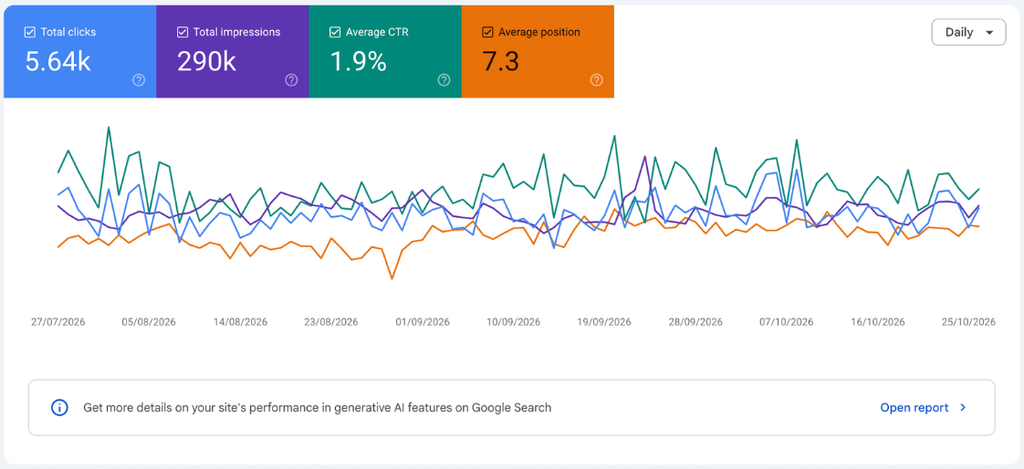
Google Search Console can help you monitor:
- Search queries that generate impressions
- Clicks from organic search
- Click-through rate
- Average search position
- Pages receiving organic search traffic
- Indexing and technical issues
Review the data by page, query, device, and location where the available reports support it.
For example, if a drain cleaning page receives many impressions but few clicks, review its search appearance and the intent of the queries. If it receives clicks but few enquiries, investigate the page experience and conversion process.
Use Google Analytics 4
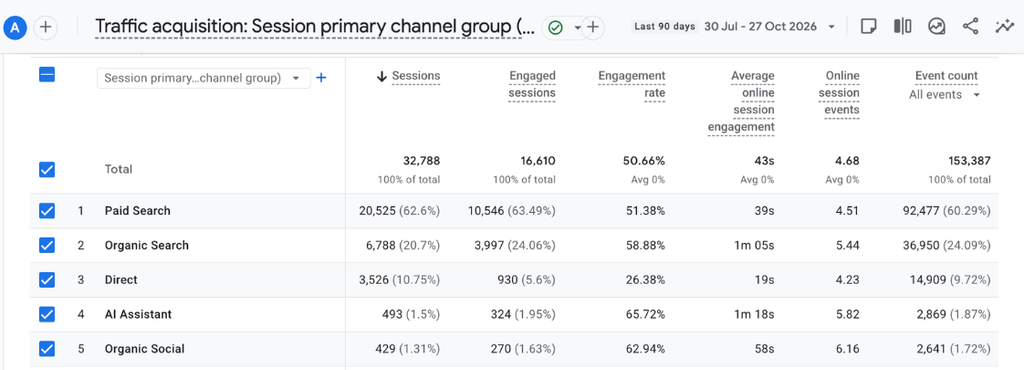
Google Analytics 4 can help measure website activity, including events such as form submissions and clicks on phone links when tracking is configured correctly.
However, a phone link click does not prove that a call connected or resulted in a booked job.
If possible, connect your website data with call tracking and your customer relationship management system (CRM). This can help you distinguish a website interaction from a real lead and a completed sale.
Follow applicable privacy and consent requirements when collecting analytics or call data.
Measure the Full Customer Journey
Use a simple reporting framework.
| Metric | What It Tells You |
|---|---|
| Organic Impressions | How often your pages appear in search |
| Organic Clicks | How many searchers visit your website |
| Relevant Landing Page Traffic | Whether visitors reach the right service pages |
| Qualified Enquiries | How many enquiries match your services and coverage |
| Calls Connected | Whether tracked call attempts result in conversations |
| Appointments Booked | How many leads become scheduled jobs |
| Completed Jobs | How many booked jobs are delivered |
| Revenue from SEO Leads | The sales value generated by organic search |
| Cost per Acquired Customer | How much you spend to gain a customer through the measured channel |
Record the source of each enquiry as consistently as possible. Some customers may find your business through Google Maps, return later through a direct visit, or call after seeing your business elsewhere.
Attribution is not always perfect, so document how you classify leads and use the same method over time.
Calculate Whether SEO Is Paying Off
Suppose your plumbing business receives 40 qualified enquiries from organic search in a month. Of those, 15 become customers, and each completed job generates an average of $400 in revenue.
That produces $6,000 in revenue from the 15 jobs.
If your monthly SEO fee is $1,500, the revenue-to-fee ratio is 4:1.
However, this is not the same as a 4:1 profit return. Revenue is not profit, and this simple calculation does not account for labour, materials, overhead, refunds, repeat business, or the reliability of lead attribution.
A better analysis also considers gross profit from the jobs, the cost of fulfilling them, and whether the SEO investment produces enough value over time.
Use your own numbers to assess performance. Do not assume another plumbing company’s results will apply to your business.
13. How Much Does SEO for Plumbers Cost?
The cost of SEO for plumbers depends on the target market, website condition, competition, number of services, service areas, and amount of work required.
A business with one location and a small website may need a different level of support from a multi-location plumbing company with many service pages and technical problems.
Common pricing models include:
Monthly retainer: A recurring fee for ongoing SEO work, reporting, and agreed deliverables.
One-time project: A fixed scope, such as a technical SEO audit, keyword research, or website migration review.
Hourly consulting: Payment for a defined amount of specialist time.
Custom project pricing: A proposal based on the website, business goals, and scope of work.
What Affects Plumbing SEO Pricing?
The main factors include:
- The current technical health of the website
- The number of services and locations to target
- Competition in the target market
- The amount of new content required
- The work needed to improve existing pages
- Local SEO and Google Business Profile management
- Digital PR and link acquisition
- Conversion tracking and reporting
- Website development requirements
Before comparing quotes, ask each provider to explain what is included. One proposal may cover only advice and reporting, while another may include content production, technical implementation, and ongoing optimisation.
A lower fee is not necessarily better value if important work is excluded. A higher fee is not automatically justified either.
Compare the deliverables, the expertise involved, the reporting process, and the expected business outcomes.
14. Should You Hire an SEO Company for Your Plumbing Business?
You can manage some SEO tasks yourself. Updating business information, requesting honest reviews, adding useful service details, and monitoring basic search data are reasonable starting points for many plumbing businesses.
Hiring an SEO company may make sense when you need specialist skills, have limited time, or face technical and competitive challenges that require ongoing work.
When DIY SEO May Be Enough
You may be able to manage the basics in-house if:
- You operate in one service area.
- Your website is relatively simple.
- You have time to maintain your profile and website.
- You can create accurate service information.
- Your main SEO needs are straightforward.
- You are comfortable learning basic reporting and site management.
You may still need specialist help for complex technical problems or major website changes.
When Professional SEO Support May Help
Consider working with an agency if:
- Your website has indexing or technical problems.
- Important service pages are missing or underperforming.
- You serve several locations and need a clear page strategy.
- Competitors have stronger local visibility.
- You need a consistent content and link acquisition plan.
- You cannot reliably track calls and booked jobs.
- You need SEO to work alongside paid search or other marketing channels.
The decision should depend on the work required and the value it can produce, not on the idea that every plumbing business must hire an agency.
How to Choose the Best SEO Company for Plumbers
If you search for the best SEO company, you will find agencies making different claims about rankings, traffic, leads, and growth. The challenge is identifying which provider can support your business goals with a clear, credible plan.
Use these criteria when evaluating an SEO company.
1. Relevant local SEO experience
Ask whether the company understands service-area businesses, local search, Google Business Profile, and service page optimisation.
Experience with plumbing or similar home service businesses can be useful, but ask for evidence rather than relying on industry claims alone.
2. A clear strategy
The provider should explain which pages need work, which services to prioritise, what technical problems need attention, and how progress will be measured.
Be cautious if the proposal consists mainly of generic monthly activities without explaining why they matter to your business.
3. Transparent deliverables
Ask what the fee includes. Clarify whether content, development work, link acquisition, reporting, and Google Business Profile management are included or billed separately.
4. Honest reporting
A useful report should connect SEO work to visibility, relevant traffic, qualified enquiries, and business results where tracking allows.
Ranking reports can be useful, but they should not be the only evidence of progress.
5. Realistic expectations
No agency can guarantee a specific Google ranking. Local results also depend on factors such as distance and competition.
A credible provider should explain the opportunities, limitations, and risks without promising a guaranteed number of leads.
6. Clear ownership and access
Your business should retain appropriate control of its website, domain, Google Business Profile, analytics, and Search Console accounts.
The agency should explain what access it needs and how the relationship will work if you stop using its services.
7. A plan that matches your budget
Ask the provider to prioritise the work most likely to help your business. A focused plan with clear priorities may be more useful than a long list of activities that your budget cannot support.
15. How SEO Revive Can Help Plumbing Businesses
SEO Revive is a digital marketing agency that can help businesses plan and improve their organic search visibility.
For a plumbing company, the work should begin with the business itself: the services you want to sell, the areas you serve, the type of customer you want to attract, and the current performance of your website.
A practical SEO plan may include:
- SEO audit: Review indexing, site structure, page performance, internal links, and other technical issues.
- Keyword research: Identify relevant plumbing service searches and local opportunities.
- Service page optimisation: Improve existing pages or plan new pages for important services.
- Local SEO: Review your Google Business Profile, local presence, and business information.
- Content strategy: Plan helpful articles around real customer questions.
- Technical improvements: Prioritise problems that affect crawling, indexing, usability, or performance.
- Link acquisition: Identify relevant opportunities to earn links and build authority.
- Conversion tracking: Measure enquiries and improve the path from website visit to customer contact.
- Performance reporting: Review what is improving, what is not working, and what should happen next.
The exact scope should depend on your website and business goals. A single-location plumber may need a focused local campaign, while a larger company may require a more extensive plan across multiple services and locations.
If you are comparing a digital marketing agency for your plumbing business, ask for a clear audit, an agreed scope of work, and a reporting plan that measures more than rankings.
You can contact SEO Revive to discuss your website, your target areas, and the SEO work that may be most useful for your business.
16. A Practical 90-Day SEO Plan for Plumbers
SEO does not follow a fixed timeline. Some improvements can be implemented quickly, while indexing changes, competitive rankings, and meaningful lead growth may take longer.
Still, a 90-day plan gives your business a useful starting structure.
Days 1–30: Audit and Prioritise
Focus on understanding the website and fixing the most important issues.
- Confirm access to Google Search Console and analytics.
- Review indexing and technical problems.
- Check the Google Business Profile.
- Research the main plumbing services and target locations.
- Review competitors’ service pages and local search presence.
- Check the website’s mobile experience and contact options.
- Record baseline impressions, clicks, enquiries, and available lead data.
- Identify the pages with the highest business priority.
Expected output: A clear list of technical fixes, priority pages, keyword targets, and tracking requirements.
Days 31–60: Improve Key Pages
Focus on the pages most likely to support valuable enquiries.
- Update the most important service pages.
- Improve titles, headings, and internal links.
- Add useful service details and genuine business evidence.
- Correct inaccurate business information.
- Improve mobile contact options and enquiry forms.
- Publish or improve relevant location pages where justified.
- Start a consistent, policy-compliant review request process.
- Resolve priority technical issues.
Expected output: A stronger website structure, clearer service information, and a better path from search to enquiry.
Days 61–90: Measure and Refine
Use the available data to decide what needs attention next.
- Review Search Console performance.
- Check which pages receive relevant impressions and clicks.
- Review enquiries and lead quality.
- Identify pages that need better content or stronger calls to action.
- Improve internal links to important service pages.
- Look for relevant local link opportunities.
- Review technical issues that remain unresolved.
- Plan the next set of improvements based on performance.
Expected output: A measured list of next steps based on real website data rather than assumptions.
Do not judge the entire campaign by whether every target keyword ranks within 90 days. Use the period to build a stronger foundation, identify early changes, and improve how results are measured.
17. Common SEO Mistakes Plumbers Should Avoid
Some SEO practices waste money or create problems that are difficult to reverse.
Creating Pages for Every Keyword Variation
Separate pages for nearly identical keywords can make a website repetitive.
Create pages around distinct services and customer needs. Group close variations when they share the same intent.
Publishing Duplicate City Pages
Replacing a city name while leaving the rest of the page unchanged does not create meaningful local value.
Write location pages only when you can provide useful, accurate information for those customers.
Buying Fake Reviews
Fake reviews damage trust and can violate platform policies. Ask for honest feedback from genuine customers and respond professionally.
Stuffing Keywords Into Business Information
Do not add extra service terms or city names to your Google Business Profile name simply to influence rankings.
Keep the name accurate and follow Google’s profile guidelines.
Buying Low-Quality Backlinks
Bulk links from irrelevant websites can create risk without providing meaningful business value.
Prioritise relevant relationships, useful content, and legitimate mentions.
Ignoring Technical SEO
A well-written service page cannot perform as expected if it cannot be indexed or if visitors cannot use it properly.
Review technical health alongside content and local SEO.
Measuring Only Rankings
A ranking increase does not always mean more qualified customers. A page may rank for irrelevant terms, attract visitors outside your service area, or fail to convert.
Track enquiries and booked jobs wherever possible.
Expecting Instant Results
SEO requires time to implement changes, for search engines to process them, and for enough data to collect.
Avoid providers who promise guaranteed positions or a fixed number of leads without understanding your website and market.
Final Thoughts
SEO for plumbers works best when it connects search visibility with the services your business actually provides.
Start with accurate business information, a strong Google Business Profile, useful service pages, and a website that makes it easy for customers to call or request a quote. Fix technical problems that prevent important pages from being discovered, earn genuine reviews, and build relevant backlinks over time.
Most importantly, measure the results that matter to your business. Track qualified enquiries, booked jobs, and revenue alongside search impressions, clicks, and rankings.
You do not need to do everything at once. Start with the pages and services that offer the clearest business opportunity, make improvements based on real data, and build from there.
If your plumbing website is not generating enough relevant enquiries, SEO Revive can help you assess your current website and identify the next steps for improving its organic search performance.